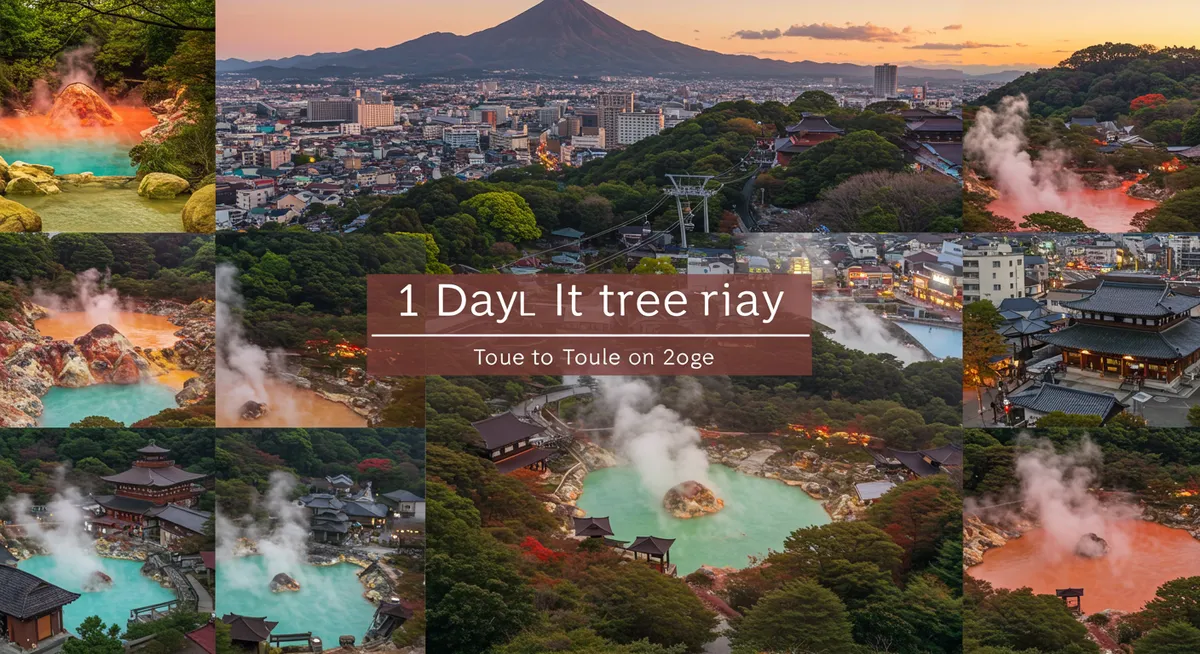
- Morning: Jigoku Meguri (Seven Hells) starting at Umi Jigoku — combo ticket ~¥2,200
- Lunch: Jigoku Mushi (hell-steamed) cooking at Kannawa
- Afternoon: Mt. Tsurumi Ropeway for panoramic views, then sand bath at Takegawara Onsen or soak at Hyotan Onsen
- Evening: Beppu Tower sunset, seafood dinner near Beppu Station
- Budget tip: Grab the Kamenoi Bus "My Beppu Free" pass (~¥1,000) for unlimited rides all day
Beppu sits on the northeast coast of Kyushu and pumps out more natural hot-spring water than almost any city on Earth. Steam drifts from sidewalk vents, public baths dot every neighborhood, and the famous "Hells" turn geothermal fury into a sightseeing spectacle. After visiting Beppu across multiple seasons, I can confirm that a single well-planned day here delivers an experience you will not find anywhere else in Japan. This Beppu 1 day itinerary for 2026 maps out every hour so you can hit every highlight without rushing.
Getting Around Beppu: Transport Essentials
Before you leave Beppu Station, pick up the Kamenoi Bus "My Beppu Free" pass from the bus-terminal ticket window. The one-day pass costs roughly ¥1,000 (as of 2026) and covers unlimited rides to Kannawa, the ropeway, and every major attraction on this itinerary. It pays for itself after just two or three rides. If you are arriving from Fukuoka, our Fukuoka-to-Beppu transfer guide covers the fastest Shinkansen and highway-bus routes.
Morning: Tour the Hells of Beppu (Jigoku Meguri)
Start your Beppu 1 day itinerary early — aim for the 8:00 a.m. opening — at the Kannawa Hells cluster. Five of the seven Hells sit within a 15-minute walk of each other here, making the morning loop efficient. A combo ticket covering all seven Hells costs approximately ¥2,200 in 2026.
Begin at Umi Jigoku (Sea Hell), the largest and most photogenic pool. Its cobalt-blue water reaches 98 °C and was formed over 1,200 years ago when Mt. Tsurumi erupted. From there, walk to Oniishibozu Jigoku (Shaven Monk's Head Hell) where thick mud bubbles resemble smooth skulls, then loop through Kamado Jigoku, Oniyama Jigoku, and Shiraike Jigoku.
Catch a short bus ride to the Shibaseki area for the final two: Chinoike Jigoku (Blood Pond Hell), famous for its iron-oxide red water, and Tatsumaki Jigoku, a geyser that erupts roughly every 30 minutes. Budget about three hours total to enjoy all seven without feeling hurried. For detailed tips on each Hell, see our Beppu Hells tour guide.
Lunch: Hell-Steamed Cuisine at Jigoku Mushi Kobo
Back in Kannawa, walk to Jigoku Mushi Kobo, the community cooking center where visitors steam their own meals using natural geothermal vents. At the entrance, buy ingredient tickets from the vending machine — choices include shrimp, crab, chicken, seasonal vegetables, corn, eggs, and sweet potatoes. Staff hand you bamboo baskets, and you lower them into outdoor steam vents heated to about 100 °C.
Cooking times range from 10 minutes for seafood to around 20 minutes for root vegetables. The result is clean, addictive flavor with zero oil. My personal recommendation: the steamed egg and sweet potato combination is deceptively simple yet unforgettable. For more local dining options, consult our Beppu food guide.
Afternoon: Mt. Tsurumi Ropeway & Onsen Time
⭐ Recommendation: Don't miss out on amazing Beppu tours - book now!
Ride the Beppu Ropeway
After lunch, take the bus to Beppu Ropeway station (about 20 minutes from Kannawa). The ropeway climbs 1,375 meters up Mt. Tsurumi, an active volcano and the geothermal engine behind Beppu's springs. CNN named this ride one of Japan's 36 most stunning locations, and the panoramic view from the summit — spanning Beppu Bay, Mt. Yufu, and the Kuju mountain range — justifies the praise. A round-trip ticket costs roughly ¥1,800, and the ascent takes about 10 minutes each way. Allow 30 to 45 minutes at the top for photos and the short summit trail.
Soak in a Legendary Onsen
Descend and head to one of Beppu's signature bathing experiences. You have two standout options:
- Takegawara Onsen — A striking Meiji-era wooden bathhouse in central Beppu offering the famous suna-yu (sand bath). Staff bury you in naturally heated sand while you wear a yukata; after about 15 minutes you rinse off and soak in the adjoining mineral bath. Entry is around ¥1,500 for the sand bath.
- Hyotan Onsen — Located in Kannawa, this award-winning facility features multiple indoor and outdoor pools, a waterfall bath, a steam bath, and a sand bath. It is consistently ranked among Beppu's best onsens and costs roughly ¥800 for general admission.
Whichever you choose, review our Beppu onsen etiquette guide before your visit so you are comfortable with Japanese bathing customs. For a broader comparison of bathing spots, see our list of the best onsens in Beppu.
Evening: Beppu Tower Sunset & Dinner
As your Beppu 1 day itinerary winds down, head to Beppu Tower for golden-hour views over the bay. The observation deck is modest but the sunset panorama — steam columns catching the low light across the cityscape — is uniquely Beppu.
For dinner, the streets around Beppu Station are packed with izakayas and seafood restaurants. Order Toriten (Oita's signature chicken tempura), fresh sashimi from Beppu Bay, and a cold Oita craft beer to close out the day. Many spots are budget-friendly, with set meals starting around ¥1,000 to ¥1,500.
Budget Breakdown: What One Day in Beppu Costs (2026)
| Item | Estimated Cost (¥) |
|---|---|
| My Beppu Free bus pass | ~1,000 |
| Seven Hells combo ticket | ~2,200 |
| Jigoku Mushi lunch | ~1,500–2,500 |
| Beppu Ropeway (round trip) | ~1,800 |
| Onsen admission | ~800–1,500 |
| Dinner near Beppu Station | ~1,000–2,000 |
| Total | ~8,300–11,000 |
For more ways to stretch your yen, check our Beppu budget travel tips.
Tips to Maximize Your Beppu Day Trip
- Start early. The Hells open at 8:00 a.m. and mornings are less crowded, especially in peak season.
- Wear comfortable walking shoes. The Kannawa Hell loop involves uphill paths and stone steps.
- Bring a small towel. Most onsens sell towels, but having your own saves a few hundred yen each time.
- Check geyser timing. Tatsumaki Jigoku erupts roughly every 30–40 minutes; ask staff for the next eruption time so you do not wait long.
- Weekday advantage. Visiting Monday through Thursday means shorter lines at the Hells and easier seating at Jigoku Mushi Kobo.
Extending Your Stay
If one day leaves you wanting more — and it often does — consider our Beppu 2 day itinerary which adds Yufuin day-trip options and deeper onsen exploration, or go all-in with our Beppu 3 day itinerary for a complete Oita Prefecture experience. Planning a wider Kyushu trip? Our Fukuoka itinerary and Kagoshima 3 day itinerary pair perfectly with Beppu. You can also browse more things to do in Beppu and our full Beppu itinerary hub for further planning.