Todai-ji Temple Visiting Guide in Nara (2026)
1971 words10 min read
About the Author
Travel Expert & Content Creator
Our travel experts have visited hundreds of destinations worldwide and are passionate about sharing authentic, practical travel advice. With years of experience in travel planning and content creation, we help travelers make informed decisions and create unforgettable journeys.
<p><strong>TL;DR:</strong> Todai-ji Temple in Nara houses the world's largest bronze Buddha inside the world's largest wooden building. Arrive by 8 AM for thin crowds, budget 1.5-2 hours, pay 600 yen at the gate, and combine the visit with Nara Park's free-roaming deer. This 2026 guide covers everything from transport and tickets to seasonal tips and lesser-known halls most visitors walk right past.</p>
<h1>Todai-ji Temple Visiting Guide: Everything You Need to Know in 2026</h1>
<div data-aff-block="viator-banner" style="text-align: center; margin: 2rem 0; padding: 1.5rem; background: linear-gradient(to bottom, #fafafa 0%, #ffffff 100%); border-radius: 0.5rem; box-shadow: 0 2px 8px rgba(0,0,0,0.1);">
<div data-id="viator-banner" data-partner-id="P00271059" data-url="https://www.viator.com/Nara/d50510" data-banner-width="728" data-banner-height="90" data-banner-language="en" data-banner-selection="banner1" data-campaign="itimaker.com-banner"></div>
</div>
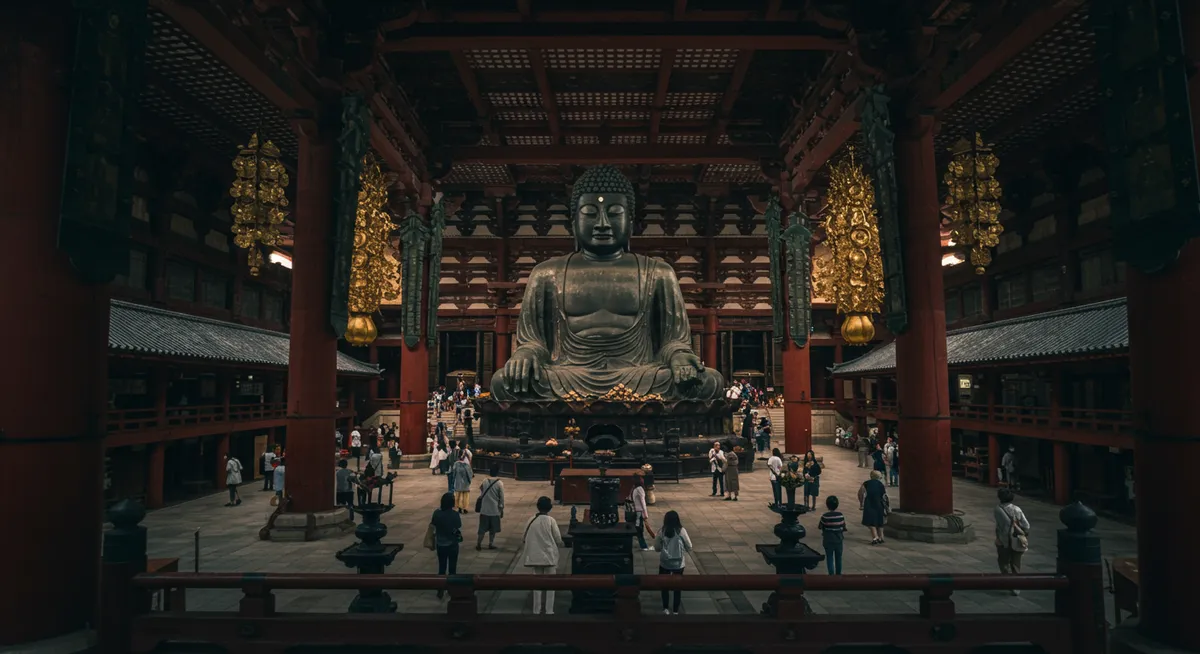
<p>Todai-ji Temple is the single sight that defines Nara for most travellers, and for good reason. Constructed in 752 CE under Emperor Shomu, the temple complex was built to serve as the head of all provincial Buddhist temples in Japan. At its centre sits a 15-metre bronze statue of Vairocana Buddha weighing roughly 500 tonnes, sheltered inside the Daibutsu-den (Great Buddha Hall), a timber structure so vast it held the Guinness record for the world's largest wooden building for centuries. Whether you are visiting Nara for a few hours or spending several days exploring the Kansai region, Todai-ji deserves a prominent spot on your itinerary. This guide distils practical, up-to-date information for 2026 visitors so you can focus on soaking in the atmosphere rather than scrambling for logistics.</p>
<div
data-gyg-href="https://widget.getyourguide.com/default/city.frame"
data-gyg-location-id="1707"
data-gyg-locale-code="en-US"
data-gyg-widget="city"
data-gyg-partner-id="26CH4CT"
loading="lazy"
></div>
<h2>How to Get to Todai-ji Temple</h2>
<div
data-gyg-widget="auto"
data-gyg-partner-id="26CH4CT"
loading="lazy"
></div>
<p>Todai-ji sits inside the eastern section of Nara Park, roughly 2 kilometres from the city's two main railway stations. Most visitors arrive from Osaka or Kyoto, and both routes are straightforward. If you are coming from Kyoto, our <a href="https://itimaker.com/blog/nara-day-trip-from-kyoto">Nara day trip from Kyoto guide</a> walks you through train options, travel passes, and timing so you maximise your hours on the ground.</p>
<p><strong>From Kintetsu Nara Station:</strong> This is the closer of the two stations, only about a 20-minute walk east through Nara Park. Exit the station, cross Noborioji-dori avenue, and follow the wide path through the park. You will pass Kofuku-ji's five-storey pagoda and encounter dozens of deer before reaching the Nandaimon Gate.</p>
<p><strong>From JR Nara Station:</strong> The walk takes 25-35 minutes depending on your pace. Alternatively, catch a city loop bus (number 2) from the east exit and alight at the Todaiji Daibutsuden stop, which shaves the journey to about 15 minutes including waiting time. A single ride costs 220 yen.</p>
<p><strong>From Osaka:</strong> The fastest connection is the Kintetsu Nara Line rapid express from Namba (about 40 minutes, 680 yen). If you hold a Japan Rail Pass, take the JR Yamatoji Line from Tennoji or Namba to JR Nara (45-50 minutes). For a detailed breakdown, see our guide on <a href="https://itimaker.com/blog/how-to-get-to-nara-from-osaka">how to get to Nara from Osaka</a>.</p>
<h2>Tickets, Opening Hours, and Practical Details for 2026</h2>
<div
data-vi-partner-id="P00271059"
data-vi-widget-ref="W-d5dc59c4-3a04-417e-8a46-7be440461eba"
data-vi-search-term="Nara"
></div>
<p>Knowing the basics before you arrive saves time and helps you plan around peak periods.</p>
<p><strong>Admission:</strong> Entry to the Daibutsu-den (Great Buddha Hall) costs 600 yen for adults, 300 yen for children aged 6-12, and is free for children under 6. The Todai-ji Museum, located just south of the Nandaimon Gate, charges a separate 600 yen admission. A combination ticket covering both the hall and the museum is available for 1,000 yen and represents good value if you want to see the collection of Nara-period sculptures. Tickets are purchased at the counter in front of each venue; no advance booking is required.</p>
<p><strong>Opening hours (2026):</strong></p>
<ul>
<li><strong>April - October:</strong> 7:30 AM - 5:30 PM</li>
<li><strong>November - March:</strong> 8:00 AM - 5:00 PM</li>
</ul>
<p><strong>Time needed:</strong> Allow 1.5 to 2 hours for the Daibutsu-den and a walk around the inner precinct. If you add the museum and the Nigatsu-do observation deck, plan for closer to 3 hours.</p>
<p><strong>Payment:</strong> Cash is the most reliable method at the ticket counters. Some vendors inside Nara Park accept IC cards (Suica, ICOCA), but it is wise to carry yen notes as a backup.</p>
<p>If you are staying overnight and want to be close to transport links, our guide to <a href="https://itimaker.com/blog/accommodation-in-nara-near-train-station">accommodation in Nara near the train station</a> covers the best hotels, guesthouses, and budget picks within walking distance of both Kintetsu and JR Nara stations.</p>
<h2>What to See Inside Todai-ji Temple Complex</h2>
<div
data-gyg-href="https://widget.getyourguide.com/default/activities.frame"
data-gyg-location-id="1707"
data-gyg-locale-code="en-US"
data-gyg-widget="activities"
data-gyg-partner-id="26CH4CT"
data-gyg-number-of-items="4"
loading="lazy"
></div>
<p>The temple grounds span a wide area and contain far more than the famous Great Buddha Hall alone. Here are the highlights worth your time.</p>
<h3>Nandaimon Gate (Great South Gate)</h3>
<p>Before you even reach the ticketed area, you pass through the imposing Nandaimon Gate. Standing 25 metres tall, this two-storey wooden gate dates to 1203 and shelters a pair of fearsome Nio guardian statues carved by the celebrated sculptors Unkei and Kaikei. Take a moment to study the dynamic musculature and expressions of these figures; they are considered masterpieces of Kamakura-period sculpture.</p>
<h3>Daibutsu-den (Great Buddha Hall)</h3>
<p>The hall you see today is actually a 1709 reconstruction and is roughly two-thirds the width of the original 8th-century structure, yet it remains staggeringly large at 57 metres wide, 50 metres deep, and 49 metres tall. Inside, the Great Buddha (Daibutsu) sits in a lotus position, flanked by two Bodhisattva attendants. Behind the statue, a wooden pillar contains a hole the same diameter as the Buddha's nostril; squeezing through is said to guarantee enlightenment in the next life. The queue for the pillar is usually the longest line inside the hall, so visit early if you want to try it.</p>
<h3>Todai-ji Museum</h3>
<p>Opened in 2011, this modern museum displays rotating selections from Todai-ji's vast collection of Buddhist art. Highlights include 8th-century Gigaku masks, gilt-bronze lanterns, and the original jewelled crown once worn by the Great Buddha. The museum offers excellent English-language signage and is a welcome air-conditioned respite on hot summer days.</p>
<h3>Nigatsu-do and Sangatsu-do Halls</h3>
<p>A 10-minute uphill walk east of the Daibutsu-den brings you to the hillside halls of Nigatsu-do (Hall of the Second Month) and Sangatsu-do (Hall of the Third Month). Nigatsu-do's open balcony provides one of the best panoramic views over Nara's rooftops and is especially atmospheric at sunset. Sangatsu-do, the oldest building in the complex (dating to the 740s), houses a stunning collection of dry-lacquer and clay statues. Entry to Nigatsu-do is free; Sangatsu-do charges 600 yen.</p>
<h3>Kaidan-in Hall</h3>
<p>West of the Daibutsu-den, the often-overlooked Kaidan-in contains four exquisite clay statues of the Shitenno (Four Heavenly Kings) from the Nara period. Because most tour groups skip this hall, you can often admire these national treasures in near-solitude. Admission is 600 yen.</p>
<h2>Best Times to Visit Todai-ji in 2026</h2>
<div data-aff-block="viator-link" style="background: linear-gradient(135deg, #f0fdf4 0%, #dcfce7 100%); border-left: 4px solid #10b981; padding: 1.25rem; margin: 1.5rem 0; border-radius: 0.5rem; box-shadow: 0 1px 3px rgba(0,0,0,0.1);">
<p style="margin: 0; font-size: 1rem; line-height: 1.6; color: #1f2937;">
<span style="font-size: 1.25rem; margin-right: 0.5rem;">🌟</span>
<strong style="color: #065f46;">Local Expert Tip:</strong> Get the most out of your Nara visit with <a href="https://www.viator.com/Nara/d50510?pid=P00271059&mcid=42383&medium=link&campaign=itimaker.com-link" target="_blank" rel="noopener" style="color: #059669; font-weight: 600; text-decoration: underline;">guided tours</a>!
</p>
</div>
<p>Todai-ji receives upwards of three million visitors each year, so crowd management is a genuine consideration. Here is a season-by-season breakdown to help you choose your timing.</p>
<p><strong>Spring (March - May):</strong> Cherry blossom season peaks around late March to early April in Nara. The temple grounds are gorgeous with blossoms framing the Nandaimon Gate, but expect thick crowds during Golden Week (late April to early May). If possible, visit on a weekday morning during this period.</p>
<p><strong>Summer (June - August):</strong> Hot and humid, but fewer international tourists. The extended 7:30 AM opening lets you beat both the heat and the crowds. The Mantoro Lantern Festival in mid-August illuminates the temple grounds with thousands of stone and bronze lanterns and is a genuinely magical experience.</p>
<p><strong>Autumn (October - November):</strong> Mild weather and vivid autumn foliage make this a peak season. The maple trees around Nigatsu-do are particularly striking in mid-November. Arrive before 9 AM to get photos without large tour groups in the frame.</p>
<p><strong>Winter (December - February):</strong> The quietest season. Temperatures hover around 2-8 degrees Celsius, but the lack of crowds and the crisp light make for excellent photography. The Shuni-e water-drawing ceremony at Nigatsu-do in early March (technically late winter) is one of Japan's most dramatic Buddhist rituals, featuring enormous flaming torches swung from the balcony.</p>
<p>For a broader view of what to see across all seasons, our <a href="https://itimaker.com/blog/nara-itinerary">Nara itinerary</a> helps you build a day-by-day plan around Todai-ji and the city's other highlights.</p>
<h2>Insider Tips for a Better Todai-ji Experience</h2>
<p>These practical tips come from multiple visits across different seasons and will help you avoid common frustrations.</p>
<ul>
<li><strong>Arrive at opening time.</strong> The first 30 minutes after the gates open are the quietest. By 10 AM, large bus tours begin arriving and the Daibutsu-den becomes crowded.</li>
<li><strong>Walk the full circuit.</strong> Most visitors see the Great Buddha Hall and leave. Continuing east to Nigatsu-do and Sangatsu-do adds only 20 minutes of walking but dramatically enriches the visit.</li>
<li><strong>Watch the deer.</strong> Nara Park's deer are a UNESCO-protected natural monument and roam freely around Todai-ji. Buy shika senbei (deer crackers, 200 yen per bundle) from licensed vendors. Bow to the deer before offering a cracker and many will bow back. However, keep maps and paper tickets away from them — they will eat anything paper-shaped.</li>
<li><strong>Dress for walking.</strong> The temple grounds involve uneven stone paths and steps, particularly on the route to Nigatsu-do. Comfortable walking shoes are essential.</li>
<li><strong>Bring a coin purse.</strong> Offering boxes are found at every hall. Having 5-yen and 10-yen coins ready makes the ritual smoother.</li>
<li><strong>Photography is permitted</strong> inside the Daibutsu-den. Tripods and flash are not allowed, so use a wide-angle lens or your phone's ultra-wide setting to capture the full scale of the Buddha.</li>
<li><strong>Combine with nearby temples.</strong> Kasuga Taisha Shrine and Kofuku-ji Temple are both within Nara Park and can be visited the same day. If you want to go deeper, check our guide to <a href="https://itimaker.com/blog/hidden-gems-nara-japan">hidden gems in Nara</a> for lesser-known spots that most tourists miss.</li>
</ul>
<h2>Frequently Asked Questions</h2>
<div itemscope="" itemtype="https://schema.org/FAQPage">
<div class="faq-item" itemprop="mainEntity" itemscope="" itemtype="https://schema.org/Question">
<h3 itemprop="name">How long does it take to visit Todai-ji Temple?</h3>
<div itemprop="acceptedAnswer" itemscope="" itemtype="https://schema.org/Answer">
<div itemprop="text">Plan for 1.5 to 2 hours if you are visiting the Daibutsu-den (Great Buddha Hall), Nandaimon Gate, and the immediate grounds. If you also explore the Todai-ji Museum, Nigatsu-do, Sangatsu-do, and Kaidan-in, allocate 3 hours or more for a thorough visit.</div>
</div>
</div>
<div class="faq-item" itemprop="mainEntity" itemscope="" itemtype="https://schema.org/Question">
<h3 itemprop="name">How much does Todai-ji Temple cost to enter in 2026?</h3>
<div itemprop="acceptedAnswer" itemscope="" itemtype="https://schema.org/Answer">
<div itemprop="text">The Daibutsu-den admission is 600 yen for adults and 300 yen for children (6-12). The Todai-ji Museum is a separate 600 yen. A combo ticket for both is 1,000 yen. Nigatsu-do is free, while Sangatsu-do and Kaidan-in each cost 600 yen. Children under 6 enter free everywhere.</div>
</div>
</div>
<div class="faq-item" itemprop="mainEntity" itemscope="" itemtype="https://schema.org/Question">
<h3 itemprop="name">Can I feed the deer near Todai-ji Temple?</h3>
<div itemprop="acceptedAnswer" itemscope="" itemtype="https://schema.org/Answer">
<div itemprop="text">Yes. Purchase shika senbei (deer crackers) for 200 yen from licensed vendors throughout Nara Park. Only feed the deer these crackers — human food can harm them. The deer can be assertive once they see food, so keep belongings like maps and tickets out of reach.</div>
</div>
</div>
<div class="faq-item" itemprop="mainEntity" itemscope="" itemtype="https://schema.org/Question">
<h3 itemprop="name">Is Todai-ji Temple wheelchair accessible?</h3>
<div itemprop="acceptedAnswer" itemscope="" itemtype="https://schema.org/Answer">
<div itemprop="text">The main approach path and the Daibutsu-den have ramp access suitable for wheelchairs and strollers. However, the hillside paths to Nigatsu-do and Sangatsu-do involve steep steps and are not wheelchair accessible. The Todai-ji Museum is fully accessible.</div>
</div>
</div>
<div class="faq-item" itemprop="mainEntity" itemscope="" itemtype="https://schema.org/Question">
<h3 itemprop="name">What is the best time of day to visit Todai-ji?</h3>
<div itemprop="acceptedAnswer" itemscope="" itemtype="https://schema.org/Answer">
<div itemprop="text">Arrive right at opening (7:30 AM April-October, 8:00 AM November-March) for the smallest crowds. The first 60-90 minutes are typically quiet. By mid-morning, tour buses arrive and the hall becomes busy. Late afternoon, about an hour before closing, is another relatively calm window.</div>
</div>
</div>
<div class="faq-item" itemprop="mainEntity" itemscope="" itemtype="https://schema.org/Question">
<h3 itemprop="name">Can I visit Todai-ji as a day trip from Osaka or Kyoto?</h3>
<div itemprop="acceptedAnswer" itemscope="" itemtype="https://schema.org/Answer">
<div itemprop="text">Absolutely. Nara is about 45 minutes from Osaka (Namba) and 45 minutes from Kyoto by train. A day trip gives you enough time to visit Todai-ji, Kasuga Taisha, Kofuku-ji, and enjoy Nara Park. Depart early to make the most of the day.</div>
</div>
</div>
</div>
<p>Todai-ji Temple remains one of Japan's most awe-inspiring cultural landmarks, and a 2026 visit is as rewarding as ever. With this guide in hand you have the practical details — transport options, ticket prices, seasonal timing, and lesser-known halls — to move beyond the standard tourist circuit and experience the temple complex in its full depth. Pair your Todai-ji visit with a walk through the wider Nara Park area, savour a quiet moment on the Nigatsu-do balcony, and let the scale of the Great Buddha remind you why this temple has drawn pilgrims for nearly 1,300 years.</p>
Prefer AI to do the work? Try our free online itinerary maker to plan this trip in minutes.