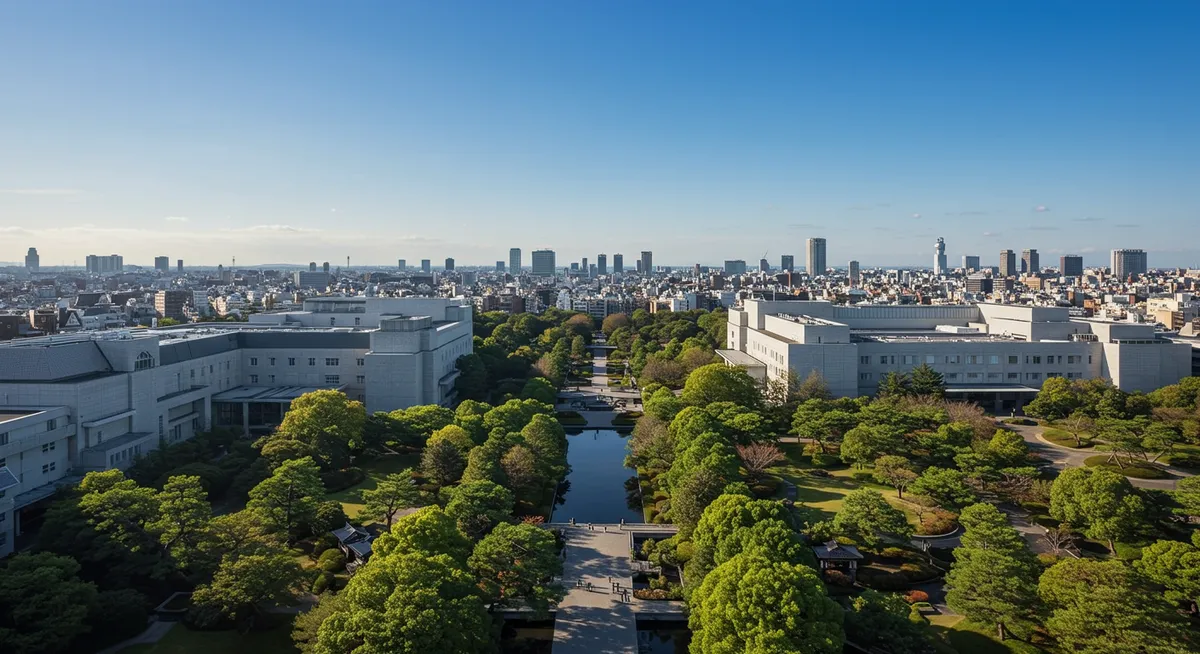
TL;DR: Tokyo is one of the world's richest cities for art lovers. In 2026, must-visit highlights include the Tokyo National Museum's 110,000-piece collection, the newly relocated teamLab Borderless in Azabudai Hills, the appointment-only Yayoi Kusama Museum, and the Roppongi Art Triangle. Most major museums close on Mondays, and advance tickets are essential for the most popular venues. Budget a minimum of two full days to cover the major institutions and at least one creative district.
World-Class Museums: Treasures of Japanese Heritage
Tokyo's flagship museums house collections that span millennia, giving visitors an unmatched window into Japan's artistic evolution. Whether you are drawn to ancient Buddhist sculpture, samurai armor, or Meiji-era oil painting, these institutions deliver the depth and context you need to understand Japanese visual culture.
Tokyo National Museum (東京国立博物館)
Japan's oldest and largest museum sits inside Ueno Park and holds more than 110,000 objects, including 87 designated National Treasures and 634 Important Cultural Properties. The campus spans several buildings, each with a distinct focus. The Honkan (Japanese Gallery) walks you chronologically from Jomon-period earthenware through Edo-period screen paintings and lacquerware. The Toyokan building covers broader Asian art — Chinese ceramics, Korean metalwork, Southeast Asian textiles — while the Gallery of Horyuji Treasures displays Buddhist bronzes and ritual objects dating to the seventh century. In 2026, the museum continues its rotating special exhibitions program, so check the schedule before you visit to catch limited-run shows on ukiyo-e, samurai culture, or tea-ceremony aesthetics. General admission is 1,000 yen for adults, with free entry for visitors under 18.
National Museum of Modern Art, Tokyo — MOMAT (東京国立近代美術館)
Founded in 1952 near the Imperial Palace, MOMAT traces the story of Japanese art from the Meiji Restoration (1868) to the present. Its permanent galleries reveal the creative tension between nihonga (neo-traditional painting) and yoga (Western-style oil painting) that defined modern Japanese art. Highlights include Yokoyama Taikan's sweeping ink landscapes, bold wartime-era social realism, and post-war avant-garde experiments by the Gutai group. The museum's fourth-floor "Viewpoint" room frames a panoramic view of the Imperial Palace gardens — one of Tokyo's most underrated photo spots. MOMAT also manages the adjacent Crafts Gallery inside a restored 1910 brick barracks, where rotating shows spotlight ceramics, textiles, lacquer, and metalwork.
Edo-Tokyo Museum (江戸東京博物館)
After an extended closure for seismic reinforcement and renovation, the Edo-Tokyo Museum is scheduled to reopen in stages during 2026. When fully operational, it offers a vivid walk through Tokyo's transformation from the fishing village of Edo into a 21st-century megacity. Life-size reconstructions of a Nihonbashi bridge section and an Edo-period tenement house sit alongside original ukiyo-e prints, merchant-class artifacts, and Meiji-era photographs. Keep an eye on the official website for confirmed reopening dates and any new permanent galleries added during the refresh.
Pro Tip: Many Tokyo museums offer discounted or free admission on specific days — the Tokyo National Museum, for example, waives fees on International Museum Day (May 18) and Culture Day (November 3). The Grutto Pass (2,500 yen in 2026) grants entry or discounts at over 100 participating museums and zoos across the Tokyo metropolitan area and pays for itself in two or three visits.
Contemporary and Digital Art: Tokyo's Cutting Edge
Tokyo's contemporary art scene is among the most inventive on the planet. From purpose-built skyscraper galleries to warehouse conversions, the city invests heavily in art that challenges convention. If you are interested in exploring Japanese pop culture and its intersection with art, our Tokyo anime and pop culture guide covers the otaku side of the creative spectrum.
teamLab Borderless (Azabudai Hills)
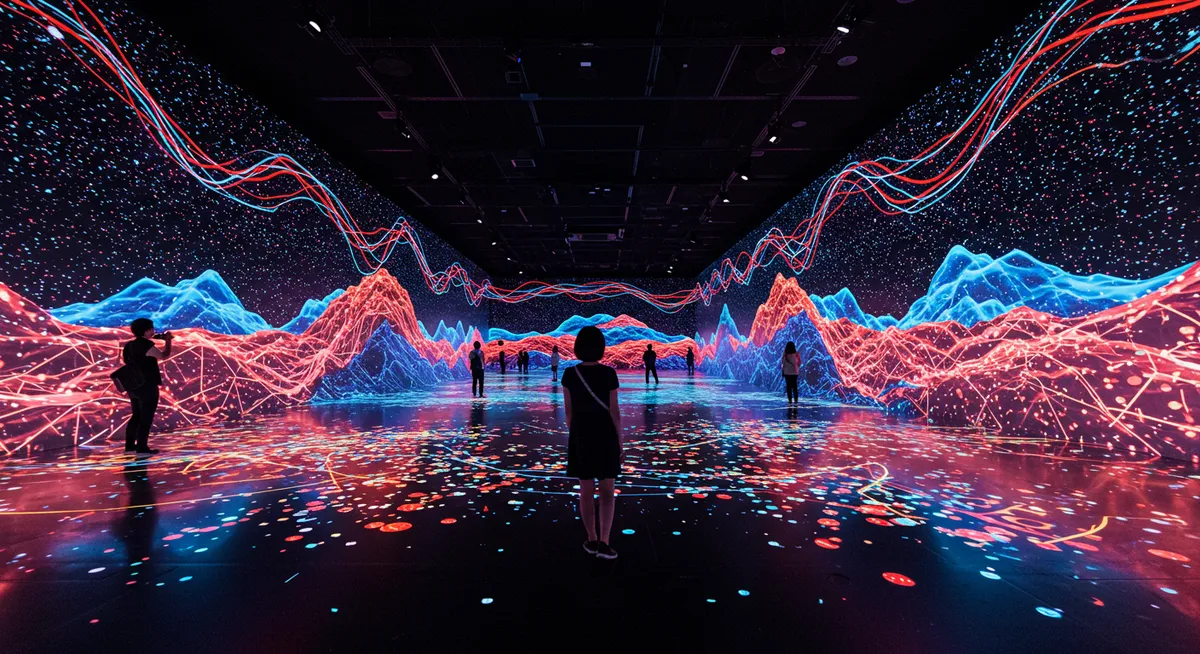
teamLab Borderless reopened in February 2024 at its new permanent home inside Azabudai Hills in central Tokyo, and it remains one of the city's hottest tickets heading into 2026. The concept is unchanged — a "museum without a map" where digital artworks spill out of their rooms, merge with one another, and respond to visitor movement — but the Azabudai Hills venue is larger and introduces new pieces that leverage improved projection and sensor technology. Standout installations include "Universe of Water Particles on a Rock," "Flutter of Butterflies Beyond Borders," and a new EN Tea House where your drink triggers blooming digital flowers. Tickets sell out weeks in advance; book online as soon as your travel dates are confirmed. Entry costs 3,800 yen for adults (weekdays) and 4,400 yen on weekends and holidays.
Mori Art Museum (森美術館)
On the 53rd floor of the Roppongi Hills Mori Tower, the Mori Art Museum programs ambitious temporary exhibitions rather than maintaining a permanent collection. Past shows have spotlighted themes like urban futures, AI-generated art, and gender in Japanese visual culture. Your ticket includes access to the Tokyo City View observation deck, making it one of the best-value cultural attractions in Roppongi. In 2026, the museum continues its evening hours program (open until 22:00 on most nights), so you can combine an exhibition visit with sunset views over Tokyo Tower and the skyline.
Yayoi Kusama Museum (草間彌生美術館)
Tucked into a quiet residential block in Shinjuku, this five-story museum is devoted entirely to Japan's most globally recognized living artist. Rotating exhibitions draw from Kusama's vast output — paintings, soft sculptures, pumpkin installations, and her legendary mirrored Infinity Rooms. The museum caps visitors at 70 per 90-minute time slot to preserve an intimate viewing experience, which means tickets (released on the first of each month for the following month) disappear within minutes. Set a calendar reminder and be ready at the stroke of 10:00 JST on release day. Admission is 1,100 yen.
National Art Center, Tokyo (国立新美術館)
Designed by Kisho Kurokawa and opened in 2007, the National Art Center in Roppongi has no permanent collection of its own. Instead, its 14,000 square meters of exhibition space host blockbuster traveling shows, annual juried exhibitions, and design fairs. The undulating glass facade is an architectural landmark in its own right, and the third-floor cafe perched atop an inverted cone offers one of Tokyo's most photogenic interiors. Check the exhibition calendar before your trip — when a major show is running (Monet, Vermeer, or manga retrospectives have all appeared here), crowds can be significant.
Specialized and Niche Art Museums
Beyond the headline institutions, Tokyo rewards curious visitors with smaller museums that dive deep into specific art forms, artists, or eras.
Sumida Hokusai Museum (すみだ北斎美術館)
Dedicated to Katsushika Hokusai — the ukiyo-e master behind "The Great Wave off Kanagawa" — this angular aluminum-clad building in Sumida ward was designed by Pritzker laureate Kazuyo Sejima. Permanent displays include high-resolution reproductions of Hokusai's complete "Thirty-six Views of Mount Fuji" series, original sketches, and a life-size diorama of the artist's studio. Rotating exhibitions focus on different periods of Hokusai's seven-decade career and his lasting influence on Impressionism and modern graphic design.
Nezu Museum (根津美術館)
In Aoyama, the Nezu Museum pairs a world-class collection of pre-modern Japanese and East Asian art with a serene 17,000-square-meter strolling garden. The building, redesigned by Kengo Kuma in 2009, uses bamboo screens and natural light to blur the boundary between indoor galleries and outdoor greenery. The collection includes National Treasure-level painted screens, Buddhist statuary, Chinese bronzes, and seasonal ceramics. Visit in late April or early May to see the irises bloom in the garden — the same flowers depicted in Ogata Korin's famous "Irises" screen displayed inside.
Ghibli Museum (三鷹の森ジブリ美術館)
Hayao Miyazaki designed this whimsical museum in Mitaka as a place where visitors "lose themselves like a child." Exhibits decode the animation process — from pencil storyboards to hand-painted cels — and the building itself hides rooftop gardens, spiral staircases, and a life-size robot soldier from "Castle in the Sky." An exclusive short film screens in the on-site Saturn Theatre on every visit. Tickets are released on the 10th of each month for the following month via the Lawson ticketing system and sell out almost immediately; book as early as possible. Admission is 1,000 yen for adults.
Artizon Museum (旧ブリヂストン美術館)
Reopened in 2020 after a full rebuild, the Artizon Museum (formerly Bridgestone Museum of Art) in Kyobashi houses an impressive collection of Impressionist, post-Impressionist, and 20th-century Western art alongside modern Japanese paintings. Works by Renoir, Monet, Cezanne, Picasso, and Pollock share gallery space with Fujishima Takeji and Aoki Shigeru. The sleek six-story building features a web-based timed-entry system that keeps galleries pleasantly uncrowded.
Art Districts and Creative Neighborhoods
🎯 Insider Tip: Discover the best Tokyo experiences with Viator Tours!
Some of Tokyo's most exciting art happens outside traditional museum walls. Entire neighborhoods function as open-air galleries where commercial galleries, design studios, street art, and independent craft shops create a layered creative ecosystem. For deeper exploration of cultural activities beyond visual art, see our Tokyo cultural experiences guide.
Roppongi Art Triangle
Three world-class institutions — Mori Art Museum, National Art Center Tokyo, and Suntory Museum of Art — anchor the Roppongi Art Triangle. A special discount program lets visitors who show a ticket stub from one museum receive reduced admission at the other two. Beyond the big three, Tokyo Midtown's 21_21 Design Sight (directed by Issey Miyake and Tadao Ando) runs thought-provoking design exhibitions, and outdoor sculptures dot the surrounding plazas. The annual Roppongi Art Night (typically held in autumn) turns the entire district into an all-night festival of light installations, live performances, and interactive art.
Yanaka and Nippori
Yanaka survived World War II air raids largely intact, giving this hillside neighborhood an atmosphere rare in modern Tokyo. Winding lanes pass small independent galleries, ceramic studios, and traditional craft shops. SCAI the Bathhouse — a contemporary gallery inside a converted 200-year-old public bath — is the anchor institution, showing emerging and mid-career artists from Japan and abroad. The adjacent Yanaka Cemetery, with its cherry-tree-lined paths, adds a contemplative backdrop. Yanaka is best explored on foot with no fixed agenda, letting chance encounters with art guide your route.
Tennoz Isle (Terrada Art Complex & Complex 665)
The former warehouse district of Tennoz Isle on Tokyo Bay has reinvented itself as a contemporary art hub. Complex 665 houses leading commercial galleries including Kodama Gallery, ANOMALY, and MAKI Gallery. Across the canal, Terrada Art Complex adds more gallery space, artist studios, and the visually stunning Pigment Tokyo — an art supply shop with walls of 4,500 hand-ground pigments displayed in laboratory-style glass tubes. Weekend gallery hopping here is free and uncrowded, a sharp contrast to the blockbuster museum experience.
Shimokitazawa and Koenji
These west-side neighborhoods cater to Tokyo's indie and counter-culture art scenes. Shimokitazawa's narrow alleys hide vintage clothing shops doubling as micro-galleries, street murals, and experimental theater spaces. Koenji, one stop further on the Chuo Line, adds a punk and DIY aesthetic with gig venues, zine shops, and community art projects. Neither neighborhood has a single must-see attraction; the appeal is the cumulative creative energy you absorb by wandering. For offbeat discoveries outside central Tokyo, our Tokyo hidden gems guide covers more under-the-radar spots.
Planning Your 2026 Tokyo Art Tour
Timing and Logistics
- Museum Closures: Most museums close on Mondays (or Tuesday if Monday is a national holiday). Plan your art-heavy days for Tuesday through Sunday.
- Advance Tickets: Essential for teamLab Borderless, Ghibli Museum, and Yayoi Kusama Museum. Book these first, then build your itinerary around the confirmed time slots.
- Grutto Pass 2026: At 2,500 yen, this pass covers entry or discounts at 100+ venues. Purchase at any participating museum and activate it on the spot — it is valid for two months from first use.
- Photography: Policies vary widely. teamLab Borderless encourages photos (no flash or tripods). The Tokyo National Museum allows non-flash photography in permanent galleries but bans it in most special exhibitions. Always check signage at each venue.
- English Support: Major museums provide English signage, audio guides (typically 500-600 yen), and sometimes volunteer-led English tours. Smaller galleries may have Japanese-only labels.
Suggested Two-Day Art Itinerary
- Day 1 — Ueno & East Side: Start at the Tokyo National Museum (morning, allow 2-3 hours), walk to the National Museum of Western Art nearby, then take the subway to Sumida Hokusai Museum. End the day exploring Yanaka's galleries on foot.
- Day 2 — Roppongi & Central: Visit MOMAT in the morning near the Imperial Palace, then head to the Roppongi Art Triangle for the Mori Art Museum and National Art Center. Reserve evening hours for teamLab Borderless at Azabudai Hills.
Frequently Asked Questions
What is the best art museum in Tokyo for first-time visitors?
The Tokyo National Museum in Ueno Park is the best starting point. Its enormous collection — spanning pottery, painting, textiles, swords, and Buddhist sculpture — provides a comprehensive introduction to Japanese artistic heritage. The campus is easy to navigate and well-labeled in English.
Do I need to book tickets in advance for Tokyo museums in 2026?
For most major museums, walk-up tickets are available. However, three venues require advance booking: teamLab Borderless (tickets sell out weeks ahead), the Ghibli Museum (released monthly via Lawson), and the Yayoi Kusama Museum (released on the first of each month). Booking ahead for the Mori Art Museum and Artizon Museum is also recommended to guarantee a specific time slot.
How much should I budget for museum entry fees in Tokyo?
Individual admission ranges from free (some public galleries) to around 4,400 yen (teamLab Borderless on weekends). A typical day visiting two or three museums costs 3,000-6,000 yen per person. The Grutto Pass (2,500 yen) significantly reduces costs if you plan to visit three or more participating venues within a two-month window.
Are Tokyo art museums accessible for visitors with disabilities?
Major institutions — Tokyo National Museum, MOMAT, Mori Art Museum, National Art Center — are fully wheelchair accessible with elevators, accessible restrooms, and barrier-free pathways. Smaller museums like the Nezu Museum and Ghibli Museum have partial accessibility; contact them directly for current details. Most museums offer free or discounted admission for visitors with disability certificates and one companion.
Which Tokyo art district is best for free gallery hopping?
Tennoz Isle (Terrada Art Complex and Complex 665) offers the best free gallery-hopping experience. The commercial galleries here are free to enter and show high-quality contemporary work in converted warehouse spaces. Yanaka is another strong option, with free-entry independent galleries and craft studios scattered along its historic lanes.
What is the best time of year to visit Tokyo for art and culture?
Autumn (October through November) is ideal. The weather is mild, foliage adds color to garden museums like the Nezu Museum, and major special exhibitions typically launch for the autumn season. Roppongi Art Night also falls in this period. Spring (late March through April) is a close second, with cherry blossoms enhancing outdoor museum grounds and several seasonal exhibitions timed to hanami.